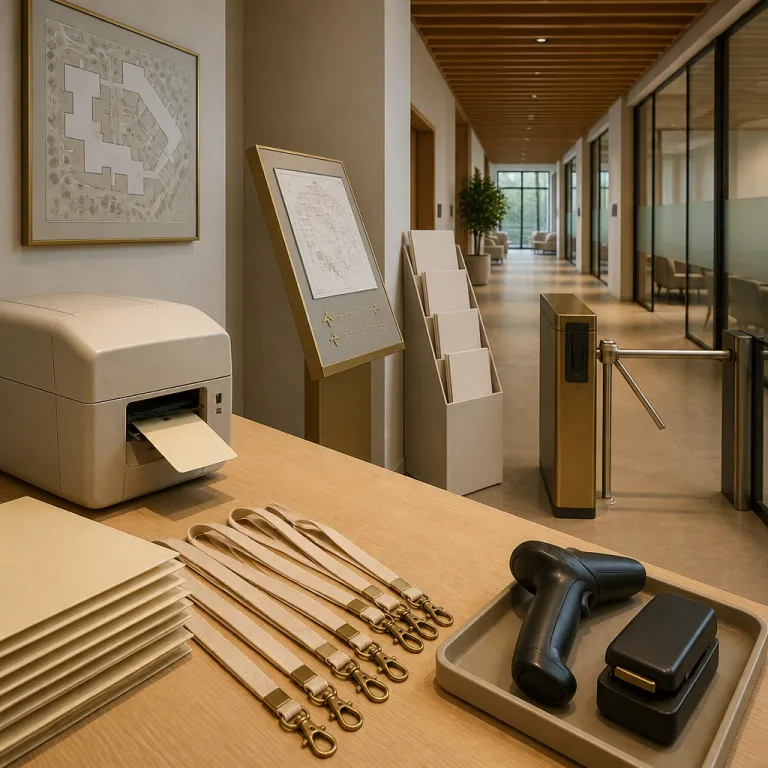
Wayfinding software as a new layer in hiring tech ecosystems
Wayfinding software is quietly becoming a strategic asset in hiring technology because it connects digital navigation with real workplace experience. As talent teams compete for the best candidates, they increasingly use indoor mapping tools to guide visitors from the street to the right interview room in real time and to prove that their workplace experience is as modern as their tech stack. This shift turns every map, every turn‑by‑turn route, and every interactive floor plan into a recruiting touchpoint rather than just a facilities tool.
Forward-looking hiring leaders now treat wayfinding as part of their employer brand, integrating indoor mapping software with applicant tracking systems and visitor management platforms to guide visitors from the lobby to assessment centers or interview pods without friction. In large public spaces such as corporate campuses, innovation hubs, and multi-building retail-style complexes that host recruitment events, a robust wayfinding platform can reduce late arrivals by several minutes per visitor and free recruiters from constant “where is this room” messages. When candidates move through a building using digital signage, live indoor positioning, and responsive maps, they experience the organization’s culture of clarity and care before speaking to a single recruiter.
Vendors like Mappedin illustrate how a dedicated wayfinding platform can plug into existing hiring software, from CRM tools to event platforms, to orchestrate candidate flows. Their map editor allows talent operations teams to update floor plans and floor plan variants as hiring events expand into new space, ensuring that every interactive map reflects the real layout of interview zones and testing labs. In a published case study, Mappedin reported that a large North American office campus reduced average visitor wayfinding time by roughly 20% after deploying digital maps and indoor navigation, while also cutting front-desk “direction” queries by more than a third within the first six months (Mappedin, “Office Campus Wayfinding Case Study,” 2022). For global employers managing thousands of square metres across multiple sites, this kind of indoor navigation and indoor mapping becomes as critical to hiring operations as scheduling or room booking tools.
From static maps to intelligent navigation for candidates and employees
Recruitment used to rely on static maps in email attachments, but intelligent navigation now sets expectations for tech-savvy candidates. When a visitor receives a link to an interactive map that opens in a mobile browser, shows real-time indoor positioning with a moving location indicator, and updates as they walk, the hiring brand signals operational excellence. This is especially powerful in mega campuses that feel like small cities, where candidates may walk several miles between parking, security, and assessment centers.
Modern wayfinding software connects digital wayfinding with live building data, such as room booking status, space booking availability, and temporary closures, to guide visitors dynamically. A candidate can see which interview room is free, which floor plans are accessible, and how long it will take in minutes to reach a testing lab, all from the same platform. For hiring events that attract hundreds of visitors into shared indoor space, this reduces congestion, improves safety, and gives recruiters more time for high-value conversations instead of corridor navigation support.
Future-focused conferences on hiring tech increasingly highlight workplace experience as a differentiator. Analyses of the future of hiring at executive forums note that intelligent indoor navigation and indoor mapping tools are now evaluated alongside assessment software and sourcing platforms because they shape the first and last metres of the candidate journey. When every map, every digital signage screen, and every wayfinding platform interaction is consistent, the organization appears coordinated, which is often a decisive signal for senior or scarce talent.
Workplace experience, retention, and the role of digital wayfinding
Once candidates become employees, wayfinding software continues to influence workplace experience and retention. New hires often feel lost in large indoor environments, and interactive maps embedded in workplace apps help guide visitors and employees to desks, collaboration zones, and training rooms without constant help from the HR team. When indoor navigation is integrated with room booking and space booking tools, employees can see which spaces are free on the map and reserve them in real time, improving both satisfaction and utilisation.
Hiring tech leaders now view digital wayfinding as part of workforce enablement, not just facilities management, because it removes friction from daily activity. Analyses on the future of workforce enablement in tech hiring show that employees expect consumer-grade software experiences at work, including navigation that feels as intuitive as their favourite maps app. When Mappedin-style platforms expose a map editor to workplace teams, they can update floor plans as teams move, ensuring that interactive maps always reflect the real space layout.
This continuous alignment between digital maps and physical space supports hybrid work policies, where employees may only visit the workplace a few days per week. A clear wayfinding platform that integrates indoor positioning, on-screen guidance, and digital signage helps them quickly locate colleagues, project rooms, and quiet zones, which strengthens collaboration and reduces wasted miles of walking. Over time, this contributes to better workplace experience scores, which in turn support hiring narratives about a well-organised, employee-centric environment.
Data, analytics, and pricing models in wayfinding platforms for hiring
Behind every interactive map and indoor navigation path lies a rich layer of data that hiring tech teams can use to refine candidate journeys. Wayfinding software captures anonymised movement patterns, such as which public spaces attract the most visitors, how long people spend near digital signage, and which routes are most used between reception and interview rooms. These data points, when analysed responsibly, help organisations adjust floor plans, signage placement, and even interview scheduling to reduce bottlenecks.
Vendors structure pricing for wayfinding platforms in several ways, often combining licence fees for the software, charges per square metre of mapped space, and optional modules for advanced indoor positioning or live location features. For hiring leaders evaluating the best platform, the key is to align pricing with measurable ROI, such as reduced late arrivals, shorter check-in queues, or higher satisfaction scores from candidate surveys. Some Mappedin-style solutions also offer flexible tiers, where organisations can start with basic maps and interactive maps, then add room booking, space booking, and map editor capabilities as their hiring operations scale.
Recruitment marketing teams can combine navigation analytics with campaign data from social media recruitment initiatives, such as those discussed in analyses of harnessing the power of social media for recruitment. When they see that visitors from a specific campaign cluster around certain public spaces or digital signage screens, they can adjust messaging or staffing in real time. Over months, this data-driven approach turns wayfinding software from a cost centre into a strategic asset that shapes both candidate flows and hiring outcomes.
Integrations, APIs, and the future of indoor positioning in hiring tech
The next wave of innovation in wayfinding software for hiring tech will be defined by integrations and open APIs. Organisations want their navigation tools to talk to applicant tracking systems, visitor management software, security platforms, and workplace experience apps without custom development for every connection. When a wayfinding platform exposes robust APIs, it becomes possible to trigger personalised routes based on a candidate’s schedule, language preference, or accessibility needs.
Indoor positioning technologies, including Wi-Fi triangulation, Bluetooth beacons, and sensor fusion, will make live location guidance more precise inside complex indoor environments. For hiring events hosted in large multi-venue complexes or multi-tower campuses, this means candidates can follow a real-time path that adapts to closed corridors, crowded lifts, or last-minute room changes. Recruiters can push updates to digital signage and interactive maps through a central map editor, ensuring that every floor plan and map reflects the current reality of the space.
As workplace experience platforms mature, they will likely bundle wayfinding software, room booking, space booking, and analytics into unified suites that serve both HR and facilities teams. This convergence will blur the line between hiring tech and building tech, because the same indoor mapping tools that guide visitors to interviews will guide employees to training, mentoring, and project spaces. Organisations that invest early in flexible, API-driven wayfinding platforms will be better positioned to adapt as new navigation standards and indoor mapping formats emerge.
Practical steps for hiring leaders evaluating wayfinding solutions
Talent acquisition and HR operations leaders evaluating wayfinding software should start with a clear map of their candidate journeys. Identify every point where a visitor might feel lost, from parking and security to reception, testing rooms, and interview spaces, then assess how digital wayfinding could guide visitors more smoothly. This exercise often reveals gaps in existing maps, outdated floor plans, or inconsistent signage across public spaces and workplace areas.
Next, build a cross-functional team that includes HR, facilities, IT, and communications to define requirements for indoor navigation, indoor mapping, and digital signage. They should evaluate whether a Mappedin-style platform with a strong map editor and interactive maps can cover all use cases, from small assessment centres to large, campus-scale environments. Criteria should include indoor positioning accuracy, live location performance, ease of updating floor plan data, and the ability to integrate room booking and space booking systems.
Finally, run a pilot in a single building or event, measuring concrete KPIs such as late arrival rates, average check-in time, and visitor satisfaction with navigation. Use this data to refine both the software configuration and the physical space layout, adjusting maps, routes, and digital signage placements. When the pilot shows real improvements in candidate and workplace experience, it becomes easier to justify broader rollout and negotiate pricing that reflects long-term strategic value.
Emerging innovations: from augmented reality to personalised workplace journeys
Emerging innovations in wayfinding software are set to transform how candidates and employees perceive workplace space. Augmented reality overlays, viewed through smartphones or lightweight glasses, will soon complement traditional interactive maps by placing arrows and prompts directly onto the real environment. For hiring events in complex indoor venues, this could reduce cognitive load and help guide visitors who struggle with conventional map reading.
Personalisation is another frontier, where wayfinding platforms use profile data, consented preferences, and real-time context to tailor navigation. A candidate with mobility constraints might receive routes that avoid stairs and minimise walking miles, while a senior executive could be guided through quieter public spaces to maintain privacy. Workplace experience apps will likely embed these capabilities, combining indoor navigation, room booking, and space booking into a single interface that adapts to each user’s role and schedule.
As these innovations mature, hiring tech strategies will need to account for both the opportunities and the ethical considerations of collecting and using navigation data. Transparent communication about how wayfinding software logs movement, strict controls on data retention, and clear opt-out options will be essential to maintain trust. Organisations that balance cutting-edge indoor positioning and digital wayfinding with strong governance will set the standard for candidate-friendly, employee-centric workplaces where every map and every metre of space supports human potential.
Key statistics on wayfinding software and workplace navigation
- Research from JLL’s “Future of Work Survey 2022” reported that employees can spend up to 30 minutes per day searching for meeting rooms or colleagues in large offices, which highlights the potential impact of indoor navigation and room booking integrations on productivity (JLL, “Future of Work Survey 2022,” p. 18).
- A 2022 survey by CBRE on global occupier sentiment found that more than 60% of corporate real estate leaders consider workplace experience technology, including digital signage and interactive maps, a top investment priority for multi-site portfolios (CBRE, “Global Occupier Sentiment Survey 2022,” section 3).
- Studies on visitor behaviour in large public spaces such as airports and malls, including research published in the Journal of Environmental Psychology in 2019, show that clear wayfinding can reduce perceived walking distance by up to 20%, which is directly relevant for candidates navigating long corridors and multiple floor plans during assessment days (Journal of Environmental Psychology, Vol. 65, 2019).
- Gartner has projected steady growth in indoor positioning and indoor mapping markets in its 2021 and 2022 location services forecasts, driven by demand from smart buildings and workplace experience platforms that integrate navigation with booking and analytics tools (Gartner, “Market Guide for Indoor Location Services,” 2021–2022).
FAQ about wayfinding software in hiring tech
How does wayfinding software improve the candidate experience during onsite interviews ?
Wayfinding software improves candidate experience by providing clear indoor navigation from arrival points to reception, interview rooms, and assessment areas. Interactive maps, real-time positioning, and digital signage reduce confusion and late arrivals, allowing candidates to focus on conversations rather than directions. This seamless navigation signals organisational competence and respect for the visitor’s time.
What should hiring teams look for when choosing a wayfinding platform ?
Hiring teams should prioritise accurate indoor positioning, an easy-to-use map editor, and strong integrations with visitor management, room booking, and workplace experience tools. They should also evaluate pricing models to ensure that costs align with measurable benefits such as reduced no-shows or higher satisfaction scores. Support for multiple buildings, complex floor plans, and accessible routes is essential for large or multi-site employers.
Can wayfinding data be used to optimise recruitment events and assessment centres ?
Yes, anonymised navigation data from wayfinding software can reveal which routes, public spaces, and rooms attract the most traffic during recruitment events. Organisers can use these insights to adjust layouts, staffing, and digital signage placements to reduce congestion and improve flow. Over time, this data-driven approach can shorten queues, improve safety, and enhance the overall visitor experience.
How does wayfinding software integrate with existing hiring tech stacks ?
Modern wayfinding platforms typically offer APIs that connect with applicant tracking systems, visitor management software, and workplace apps. These integrations allow schedules, room allocations, and visitor profiles to feed directly into navigation experiences, generating personalised routes and real-time updates. This reduces manual work for HR teams and ensures that maps always reflect the current state of the space.
Is wayfinding technology relevant for smaller offices or only for large campuses ?
While the benefits are most visible in large campuses and complex multi-building venues, smaller offices can also gain value from digital wayfinding. Even a single building with multiple floors and shared spaces can benefit from interactive maps, room booking integration, and clear floor plans for visitors. For growing organisations, starting early with scalable wayfinding software makes future expansion smoother and more consistent.
